


Meeting the Diverse Life Under the Surface
The ocean is teaming with life, with over 200,000 species known to us and many more yet to be discovered. They play a crucial role in the ocean's vital systems and processes, all with unique personalities and traits that enable them to survive and thrive. They vary in shape and size, with some more known to us and some are still a mystery.
NOC's work researches the impact marine life has on our wider earth system including oxygen production, food chains and other impacts. Below you can dive deeper into some of the most interesting creatures in our ocean and learn about their lives, habitat and more.
If you'd like to learn more about our research into marine life, check out our Biodiversity mission.
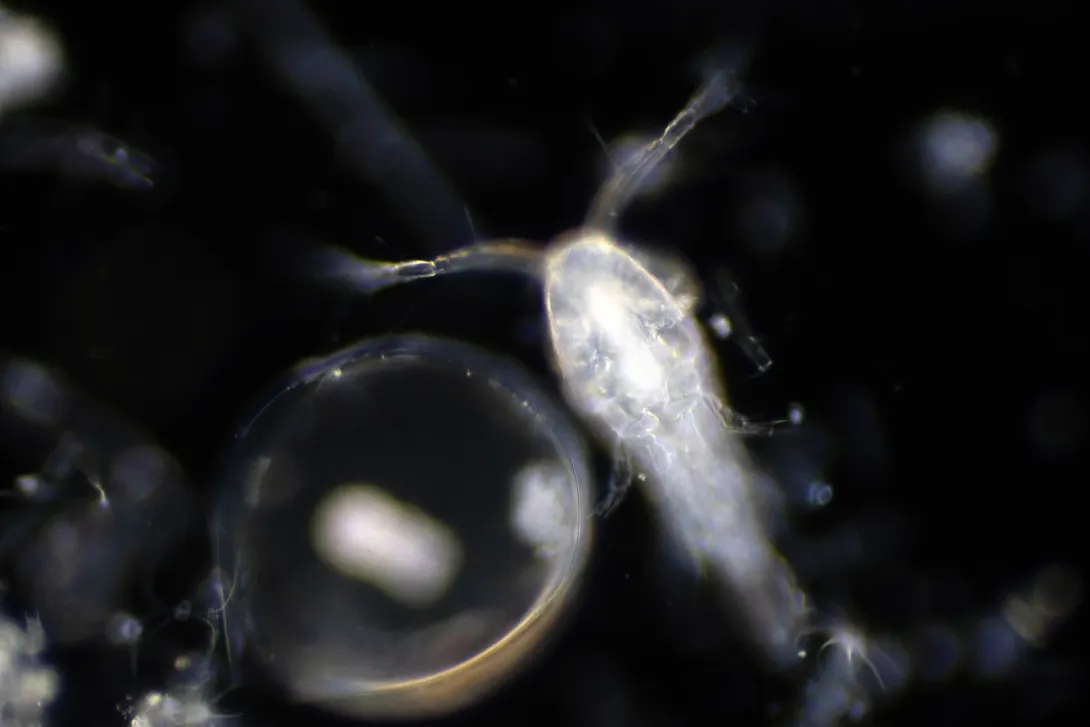
Plankton
Plankton are drifting aquatic life forms - organisms carried by currents, rather than by their own swimming strength. They include some of the smallest organisms on Earth, such as microscopic algae and bacteria, as well as much larger creatures like jellyfish which, despite their size, still qualify as plankton because they cannot propel themselves effectively against ocean currents.

Deep-Sea Creatures
Much of the ocean remains a mystery, and only a fraction of the life which dwells within has been discovered. That which has, is often strange and otherworldly, giving way to folklore and intrigue. Hold your breath, dive in, and meet the creatures of the deep!

Dive Deeper: The Discovery Collections
The Discovery Collections comprise benthic and pelagic samples from many areas of the world's oceans. It is the only collection consisting solely of deep-sea and open-ocean invertebrates in the UK and provides vital insight into the species that live at extreme ocean depths.

A World Beneath the Waves
By helping people understand the ocean, we open the door to a deeper connection with nature and our planet. Ocean literacy sparks curiosity, empowers people to make informed choices, and reveals just how much the ocean supports us all. By sharing this knowledge, we can protect it today and inspire future generations to do the same.